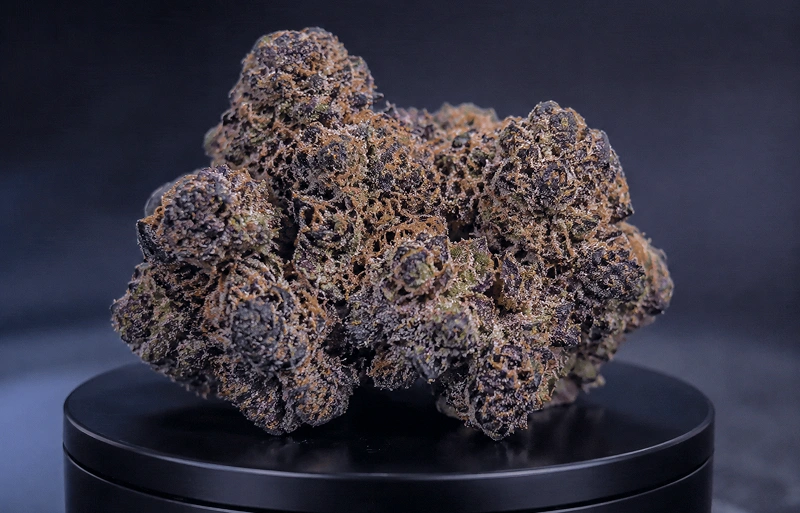
I wasn’t planning to write about this one right away. Usually, I sit with a strain over a few sessions before I put anything down. But the black truffle strain left enough of an impression after just one sitting that I started taking notes before I even finished the bowl. What follows is a real, session-by-session account of what happened – not a rundown pulled from a menu card. If you want the full picture of the black truffle weed strain, from the first few minutes to where it eventually settled, here’s exactly what I noticed.
What Is the Black Truffle Strain?
Black Truffle is an indica-dominant hybrid, generally believed to descend from Gelato #33 crossed with another cultivar that most breeders keep under wraps. That mystery parentage is part of the appeal – you know half the story, and the other half shows up in the smoke itself.
- Type: Indica-dominant hybrid (roughly 60% indica / 40% sativa)
- Genetics: Gelato #33 x undisclosed parent
- Dominant terpene: Caryophyllene
- THC range: 18% to 28%, most commonly tested between 22% and 27%
It’s not a strain with a single clean origin story, the way some crosses are, and I think that’s fine. A lot of the more interesting genetics floating around right now come with a little mystery attached. You can read more about how I think through strain lineage on my About page, and I get into breeding backgrounds like this pretty often on the blog.
Black Truffle Strain: Indica or Sativa?
Black Truffle is indica-dominant, typically sitting around 60% indica and 40% sativa. That ratio is exactly where I’d expect it to land based on how the session went – there’s a cerebral lift early on, but it never really competes with the body relaxation that eventually takes over.
If you’re chasing something purely uplifting, this isn’t quite it. And if you want something that flattens you immediately, it’s not that either. It’s built for a slower unwind, the kind of high that gives you a window of clarity before easing you toward the couch. I answer a lot of questions like this on my FAQ page, and I’ve broken down similar indica-leaning hybrids on the blog if you want more context.
The Session, Minute by Minute
Here’s how the high actually unfolded, broken down by roughly when each shift happened.
0 to 5 Minutes: The Onset
The first thing I noticed was how fast it showed up. Within a couple of minutes of the last exhale, there was a noticeable lift right behind the eyes – sharp, a little energizing, almost like my focus had been tightened. Conversation felt easier. My thoughts weren’t racing, just clearer than usual. It’s the kind of onset that catches you off guard if you’re used to strains that build slowly – this one doesn’t wait around.
15 to 20 Minutes: The Shift
That early window started fading, and something heavier began underneath it. My shoulders dropped first, then my whole body followed – not sudden, just a steady sink into the chair. This is the part of the high that earns Black Truffle its reputation as a “creeper.” One moment you’re sharp and talkative, and the next you’re deep into a body high you didn’t quite see coming.
30 Minutes and Beyond: Where It Settled
Nothing about it felt uncomfortable, just heavier than the first act suggested. By the end of the session, I was in full wind-down mode, and I could tell sleep wasn’t far off if I let it. I’ve had a similar creeper experience with a couple of other reviews on my blog – it’s worth reading if you want to compare notes with the Pop Rocks strain. You can also check my experience page for how I track sessions like this one.
Flavor and Aroma
Cracking the jar open, the smell wasn’t what I expected from the name. Less sweet, more savory – earthy, a little damp, with a layer of bittersweet chocolate sitting on top.
- First smell: Damp earth and dark chocolate
- Ground up: A roasted coffee note becomes more obvious
- On the exhale: Lingering earthiness with a subtle trailing sweetness
- What it’s not: Candy-sweet or fruit-forward like most trending hybrids right now
Too many hybrids chase the same dessert-flavor formula these days. Black Truffle stands out because it doesn’t. For more flavor breakdowns like this one, the rest of my reviews are on the blog, and I touch on terpene-driven flavor differences on the homepage as well.
Black Cherry Truffle vs. Black Truffle Gelato: How They Compare
People mix these three up all the time, so let me clear it up while it’s on my mind.
- Black Cherry Truffle strain: This one leans fruity. It’s more relaxing overall, with a cherry flavor that pushes the earthiness aside for something sweeter.
- Black Truffle Gelato strain: Here, the Gelato side takes the wheel more – sweet and savory, split pretty evenly instead of picking a lane.
- Standard Black Truffle (the one I smoked): Sits right in the middle, but tips more toward earthy and savory. Still keeps some of that Gelato brightness up top, though.
If you’re at a dispensary staring at all three names on the shelf, that’s basically the cheat sheet. I get into comparisons like this pretty often on the blog, and if you’ve got a specific batch you’re trying to figure out, just reach out – happy to weigh in.
Appearance and Bud Structure
The buds themselves are dense and heavy, dark olive green with a noticeably deeper tone than most hybrids on a dispensary shelf. Thin orange hairs run through the structure, and the trichome coverage is thick enough to give the whole thing a frosted, almost dusty look under light.
It photographs well, but it’s not flashy in the way some purple-heavy strains are. This one looks the way it smokes – a little darker, a little more understated, with quality that’s obvious once you handle it rather than something you notice from across the room. You can see how this compares to other strains I’ve broken down visually on the blog and on my experience page.
Potency: How Strong Is the Black Truffle Strain?
Black Truffle typically tests between 22% and 28% THC, putting it well into experienced-user territory. That range tracks with what I felt – this wasn’t a strain that eased in gently on the potency side, even if the effects themselves built gradually.
- THC range: 22% to 28%, occasionally as low as 18%
- Who it suits: Experienced smokers who can handle a fast-building creeper effect
- Who should be cautious: Beginners or anyone with low THC tolerance
- Why it matters: The strength combined with the delayed body effect can catch you off guard if you’re not pacing yourself
Pace matters more here than with most strains I’ve covered. I get into potency versus experience level more on my homepage, and I keep notes on strain strength across reviews on the blog.
My Takeaway After One Session
One session was enough to tell me the black truffle weed strain earns its reputation. The onset is fast, the flavor is genuinely different from the sweet-and-fruity formula most hybrids lean on right now, and the creeper effect gives it a personality that’s hard to fake. It’s not for someone looking for a light afternoon smoke, and the potency means it deserves some respect going in.
What stuck with me most was how the whole session had a clear arc – sharp and clear early, heavy and settled by the end, without ever feeling chaotic in between. That’s not something every strain manages, mystery genetics or not. I’ll be sitting with this one again before I call it a final verdict. For more session notes like this, check out the rest of my blog, or get in touch if you’ve got a strain you think I should try next.
Frequently Asked Questions
1. Is Black Truffle an indica or sativa strain?
Black Truffle is an indica-dominant hybrid, roughly 60% indica and 40% sativa. There’s a head lift early on, sure, but the indica side takes over as the session goes on – by the end, it’s the body high doing most of the work.
2. What is the Black Truffle strain good for?
Black Truffle is good for stress, aches, and just winding down at night. It starts clear-headed, then pulls you into that heavy, relaxed feeling – a solid pick if you’re not planning to go anywhere for the rest of the evening.
3. How strong is the Black Truffle strain?
Black Truffle typically tests between 22% and 28% THC, so it’s up there with the stronger hybrids. It doesn’t hit all at once either – the effects creep up later in the session, which is why it suits people who already know their limits.
4. What does the Black Truffle strain taste like?
Black Truffle tastes earthy and a little damp, almost like dark chocolate with soil underneath. Break the buds apart, and a roasted coffee note shows up, too. It’s not sweet or fruity, which sets it apart from most trending hybrids right now.
5. What is the Black Truffle strain crossed with?
Black Truffle comes from Gelato #33 crossed with a second parent that’s never been officially confirmed. The Gelato half explains the brightness up front, while the mystery parent is probably behind the darker, earthier character underneath it.
6. Is the Black Truffle strain good for sleep?
Yes, Black Truffle can help with sleep, especially with a slightly bigger dose. It doesn’t knock you out right away – the relaxation builds slowly enough that falling asleep ends up feeling natural instead of forced.
7. Is the Black Truffle strain good for beginners?
Black Truffle isn’t really a beginner strain. The THC is strong to begin with, and then the effects hit harder later in the session, right when you might not be expecting it – that combo can be a lot without any built-up tolerance.
8. What are the side effects of the Black Truffle strain?
The most common side effects with Black Truffle are dry mouth and dry eyes, and water usually handles both fine. If you’re sensitive to high THC, keep an eye out for mild anxiety or paranoia, especially with a bigger dose.
9. Is the Black Truffle strain worth trying?
Yes, Black Truffle is worth trying, at least for one full session with it. The flavor alone sets it apart from the sweet, fruity hybrids everywhere right now, and how the high builds and settles felt deliberate, not random.