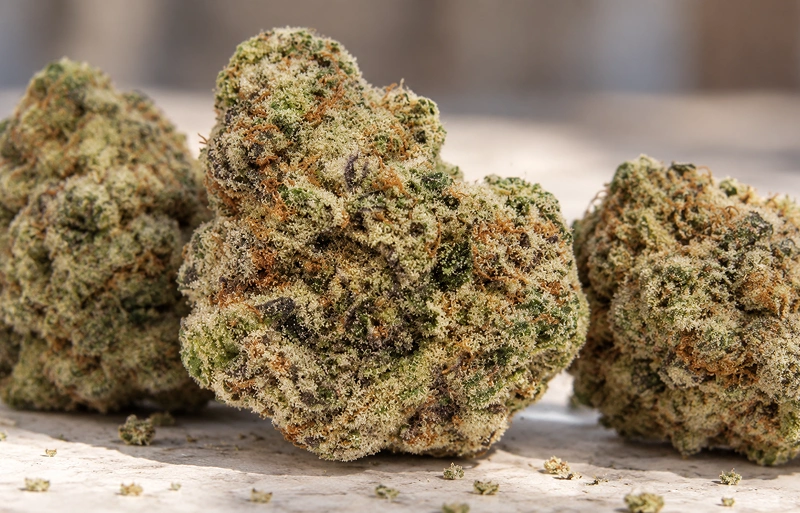
It seems every year or so, there is one particular strain that dominates the cannabis industry. The dominant strain in 2026 is Toad Venom. Its clones have sold for thousands of dollars, fakes are common, and the name now appears on products that are not necessarily the same strain. As the owner of a cannabis operation, I don’t judge a strain by its popularity. I judge it on its genetics, lab results, price, and risks. In this Toad Venom strain review, I put the hype to that test.
What Is the Toad Venom Strain?
The Toad Venom strain is an excellent hybrid variety of cannabis created by Ronin Seeds from Animal Face and Sin Mintz. It quickly gained popularity and became the most discussed cannabis strain of 2026. Even though the name suggests there is toad venom in the product, there isn’t any.
Toad Venom at a Glance
- Type: Hybrid, often described as indica-leaning
- Genetics: Animal Face × Sin Mintz
- Breeder and selector: Ronin Seeds bred it; Green Dragon in North Hollywood selected the keeper
- Also called: Becky, TV, or “the Toad”
- THC: Mostly 27% to 33% on legal menus
- Aroma: Mint, lime candy, gasoline, and funk
- Best for: Experienced consumers and evening use
Its fame also brought a backstory full of disputes, decoys, and record-breaking prices. That backstory matters because, as a cannabis operator, I have seen how famous names attract copies. To understand this Toad Venom weed strain properly, and to tell the genuine cut from look-alikes, start with where it came from.
Toad Venom Genetics: Where the Flavor Comes From
The unique flavors and potency of the Toad Venom strain become clear when you consider its parents. This strain is a hybrid of Animal Face and Sin Mintz.
Animal Face: Fuel + Power
Animal Face comes from Seed Junky Genetics and is a cross of Face Off OG and Animal Mints. It provides the fuel and strong kushy aroma, along with most of the potency.
Sin Mintz: Mint + Candy
Sin Mintz is a Ronin creation that crosses Sin Mint Cookies and Zkittlez. It brings in the sweet mint-cookie dough flavors, as well as the tropical lime-candy notes.
Summing Up the Genetics
When combined, this hybrid plays like a stronger, gassier version of Kush Mints with Zkittlez on top. That is exactly why most reviews mention a minty, sweet, chemical aroma.
The genetics behind Toad Venom involve some of the most respected breeders, including Cookies, Seed Junky, and Sin City Seeds. From my years in cannabis cultivation, I know strong parents are the best predictor of a strong keeper, and these parents were proven, high-demand strains before the hype.
How Did “Becky” Become Toad Venom?
Toad Venom was initially a keeper plant named “Becky,” selected by Green Dragon in North Hollywood from Ronin Seeds genetics.
One Keeper Plant Among 30 Seeds
Around 2021 or 2022 (sources differ), Green Dragon grew about 30 seeds of Ronin’s Animal Face × Sin Mintz hybrid. Of those 30 plants, only one became a keeper. This plant became the ancestor of every legitimate Toad Venom cutting on sale.
The Renaming and the Controversy
Later, the cut reached Ronin’s grow in Oklahoma, where it was renamed Toad Venom and backed by aggressive hype marketing. Green Dragon has claimed the cutting left its facility without permission, while Ronin insists that sharing cuts is fair game. Ronin also says it released decoys to throw people off track and claims that one widely spread counterfeit is simply Detroit Runtz under a different name.
From Rare Clone to Mass Breed
The controversy boosted the cut’s popularity. One breeder even sold clones for $5,000 each. In May 2026, Ronin and Green Dragon held public clone drops in Los Angeles, and since then, the plant has become widespread. There are now more than 20 Toad crosses.
Not Every “Toad Venom” Is the Same Plant
That rapid spread created a real problem. Most strain pages skip this part, yet it costs buyers the most. The name “Toad Venom” now covers several different products:
- The genuine clone: the Becky cut from Ronin’s Animal Face × Sin Mintz cross. This is the plant behind the hype.
- Eleven Thirty Genetics’ Toad Venom: a seed line bred from Venom OG and All Gas OG. It shares the name but not the genetics.
- “The Toad”: an unrelated strain bred from Chemdawg and Afghani.
- S1 seeds: made by self-pollinating the clone. They are genuine relatives, but every seed grows a little differently, so results may not match the original keeper.
- Frog Poison: a cut some growers believe is the same plant under a different name. That is possible, but no public DNA test confirms it.
Always ask which Toad Venom you are buying. As I explained in my Strawnana strain review, the name matters less than the plant behind it. A real Toad Venom weed strain listing should name the producer, the batch, and the lab results.
Toad Venom Weed Strain Profile: Aroma, Flavor, and Looks
Once you know you have the real cut, the experience starts with the jar.
Aroma and Flavor
Toad Venom has an overpowering smell as soon as the container is opened. The most common notes are minty cookie dough, lime candy, and gasoline, with an earthy funk underneath. Some batches lean toward peach rings or a sour-soda edge as the strain cures, which is why the curing process matters so much. A small number of reviewers detect a cheesy or musty note, a common trait of gas strains.
Inhaling gives you a doughy, minty taste with a fuel undertone, while exhaling reveals the sweetness of lime and candy.
Appearance
Opinions are divided when it comes to visual appeal. Early buds were described as spongy and plain, not the frostiest flowers out there. Newer batches have denser, sage-green buds with purple hues.
This matters because Toad Venom’s appearance varies greatly depending on who grows it. So evaluate the product by its aroma and lab analysis, not by photos alone.
How Strong Is Toad Venom? THC, Terpenes, and Effects
The Toad Venom strain is quite potent. Legal dispensary menus list it between 27.6% and 33.5% THC, which makes it one of the strongest flowers at any local dispensary. Only concentrate-heavy products like cannabis snowballs typically go much higher.
Lab Data Highlights
The best information source is the lab report for a Florida medical batch by The Flowery. It showed 31.2% total THC, nearly zero CBD, and 3.78% total terpenes. Beta-caryophyllene was the leading terpene, followed by limonene, linalool, myrcene, and humulene. That high terpene content explains the strain’s powerful aroma.
Effect Reports
Reports about Toad Venom’s effects vary by person and by grower, because many farms now cultivate the clone. Still, most people agree that it delivers an immediate, intense head rush that settles into a full-body effect. Some find it stimulating and creative, while others find it sedating.
All effect descriptions are anecdotal. No clinical studies have been conducted on this cultivar, and claims about pain relief or better sleep come only from user reports.
Who Should Try Toad Venom, and Who Should Skip It?
The Toad Venom strain is best for experienced consumers who enjoy strong, gassy flavors and plan to use it in the evening or on a day off.
A Good Fit If You
- Already handles high-THC flower well
- Enjoy loud, gassy terpene profiles
- Like comparing batches from different growers, since this strain varies so much by farm
Skip It If You
- Are new to cannabis or have a low tolerance, because THC often runs above 30%
- Are prone to anxiety or paranoia with strong strains
- Need to stay sharp, work, or drive
Dry mouth, dry eyes, dizziness, and in some cases, anxiety are among the reported side effects. One review mentioned a new user freezing up for 30 minutes after a few puffs. Don’t drive after using cannabis.
If you decide to try it, begin with one small puff, wait at least 15 minutes before having more, and make sure you are in a comfortable environment with water nearby. For more general questions, visit my FAQ page.
Toad Venom Strain Review: My Verdict as an Operator
Here is my honest Toad Venom strain review: the hype is real, but only for the real plant. As an operator, I judge any strain by evidence rather than buzz.
Where Toad Venom Wins
- Documented genetics: the breeder, the cross, and the original selector are all known.
- Lab-confirmed potency: verified batches test above 30% THC.
- A distinctive profile: mint, lime candy, and gas are hard to mistake for anything else.
Where It Falls Short
- Inconsistent quality: so many farms now grow it that batches vary widely.
- Counterfeit risk: the name is valuable enough to fake.
- Hype pricing: Some sellers charge far more than the flower is worth.
My Rating
I rate it 8.5/10 for a verified batch from a licensed producer. It earned its reputation through taste and potency, not marketing. Without a lab test and a named producer, I would not rate it at all, because you can’t tell what you are getting.
My 5-Point Hype Test for Any Viral Strain
Toad Venom will not be the last hyped strain, so here is the checklist I use before trusting any viral cultivar.
- Traceable genetics. Can you name the breeder, the cross, and who selected the keeper? Toad Venom passes this one easily.
- A batch-matched lab report. The certificate of analysis (COA) should match the product’s batch number, not just the strain name.
- A named, licensed producer. Anonymous “exotic” packaging is a red flag.
- Consistency across growers. Compare reviews of batches from different farms. If descriptions vary wildly, the name may be doing the selling.
- Fair price per potency. Hype often adds a premium that the flower does not justify, a pattern I see often in cannabis branding.
This test turns a strain review from mere opinion into due diligence. It also protects you from paying top-shelf prices for an average plant with a famous name. Every Toad Venom strain review, including this one, should be judged by this test.
Toad Venom Strain Price: What You Should Pay in 2026
The average Toad Venom strain price at a legal dispensary is between $22.50 and $65 per eighth (3.5 grams), based on menu data collected in September and October 2026. Michigan is the cheapest market, while Green Dragon’s own California flower is the most expensive. Your total will also depend on the format you buy.
| Format | Typical Legal Price (Sept-Oct 2026) |
| Eighth, Michigan | 22.50-45 |
| Eighth, California | 32.50-65 |
| Eighth, Florida (medical) | About $55 |
| Eighth, New York | About $50 |
| Quarter (7 g) | About $140 |
| Half ounce (14 g) | 80-220 |
| Pre-roll (1 g) | From $10 |
| Clones (May 2026 official drops) | $630 for two to $1,000 for three |
Pre-rolls and vapes offer a cheaper way to try it, while clone prices reflect scarcity and access to genetics rather than smoking quality.
Is Toad Venom Worth the Price?
Yes, at legal dispensary prices, it usually is. An eighth with 30% THC contains around 1,050 mg of THC, so at $50, you pay roughly $4.76 per 100 mg. If someone charges $120 to $150 for an eighth, as rumored in unlicensed markets, you are buying the name, not the flower.
That math changes how you should read any Toad Venom strain price. A fair one in 2026 looks like any other top-shelf eighth. Overpaying for hype is a habit I avoid in business too, where I always put cash flow first.
Toad Venom Strain: Where to Buy, Legal Options in 2026
The short answer to Toad Venom strain where to buy is a licensed dispensary in a state where adult-use or medical cannabis is legal. Here is where verified producers have stocked it in 2026:
- California: Green Dragon in North Hollywood, plus brands like Connected Cannabis Co.
- Michigan: Seed Junky-branded flower in several cities.
- Oregon: Evans Creek Farms, known for small batches.
- Washington: Tilted Cannabis.
- Florida (medical only): The Flowery.
- New York: Milkweed, at licensed retailers.
Stock changes quickly, so use strain finder websites to check current menus in your area. Also, make sure the dispensary is licensed by your state, because state compliance rules differ widely.
A Message for Cultivators
Cultivators should only buy clones from a licensed nursery and grow according to their state’s laws. Stay away from vendors who ship Toad Venom flower across state lines. That is the riskiest Toad Venom strain where to buy route, and it is where most fake products show up.
How to Spot Fake Toad Venom
You spot fake Toad Venom through documentation, not labeling. A genuine batch should come with a lab test certificate and a named, licensed producer.
Here is my quick checklist:
- Ask for a COA that matches the batch number on your product.
- Look at the profile. Expect THC in the high 20s to low 30s, with caryophyllene and limonene near the top.
- Identify the grower. Authentic batches name the farm or brand.
- Watch the price. A very cheap or unreasonably expensive product is a red flag.
- Ignore “verified cut” claims made without any evidence.
- Skip “Toad Venom” sold as delta-8 or THCa outside regulated markets.
Remember that decoy cuts and rebranded strains are part of this plant’s history, and the popularity created a motive for fakes. As a licensed operator, I never trust a label alone. Before following any Toad Venom strain where to buy recommendation, including the ones in this article, always check the COA.
A Note for Texas Readers
Many people in Texas wonder whether they can buy the Toad Venom strain as THCa flower. As of October 2026, my straightforward answer is no, not safely for now. The laws are changing rapidly, so here is a brief update.
What Has Changed
- June 2026: The Texas health department ruled that counting THCA toward the 0.3% THC limit for hemp became enforceable after a court lifted an injunction. Legal battles are still ongoing.
- Late July 2026: The state placed several THC variants in Schedule I. Sources differ on whether this applies to THCa flower, which leaves its legal status unclear.
- December 11, 2026: A new federal total-THC definition of hemp is currently set to take effect, which would exclude most THCa flower from the legal hemp market.
What This Means for You
When you find a Toad Venom strain where to buy listing aimed at Texas residents, exercise caution. Before any purchase, ask the compliance question every buyer and business should ask. Stay up to date with the law, buy only from compliant sellers, and remember that you must be 21 or older to purchase in Texas.
Strains Like Toad Venom
If you can’t find a verified batch, or it is not legal in your area, the best option is to look at the parents and close relatives of the Toad Venom strain.
Similar Flavor and Potency
- Animal Face: the same potent fuel effect, minus some of the candy sweetness.
- Sin Mint Cookies: the minty dough side of the profile.
- Animal Mints and Kush Mints: the mint-and-fuel core that gives Toad Venom its signature character.
- Zkittlez strains: a good match for the lime-candy flavor.
The Toad Venom Family
Look for Frog Poison, Galaxy Toad, Fire Belly Toad, or Demon Toad, a limited live rosin made from Toad Venom crossed with Sin Mintz. These varieties carry some of Toad Venom’s character, yet each one is its own cannabis strain. If you enjoy resin-heavy products, concentrate-coated snowballs are another option worth exploring.
One warning: do not treat Eleven Thirty Genetics’ Toad Venom or “The Toad” as alternatives. They share a similar name but have different flavor profiles. As always, check the flavor and lab analysis before you buy.
Final Verdict: Is the Toad Venom Hype Real?
Yes, the hype is real, as long as you get the genuine plant. Documented genetics, lab-tested potency above 30% THC, and an intense mint, lime, and gas flavor have helped the Toad Venom strain earn its reputation.
Its drawbacks are a lack of consistency and credibility, given the many cultivators and counterfeit products tied to the name.
What I have learned from this Toad Venom strain review can be summed up in one line: buy only from legal sources, pay a fair top-shelf price, verify the COA, and follow your state’s laws.
For more strain reviews, compliance insights, and lessons from building a multi-state cannabis business, visit my official website.
FAQs
1. What is the Toad Venom strain?
Toad Venom is a powerful hybrid created by Ronin Seeds from a cross of Animal Face and Sin Mintz. Green Dragon in North Hollywood selected the famous keeper, originally nicknamed “Becky.” This strain has a high THC content, often above 30%, and offers a mint, lime, and gas scent.
2. Who created Toad Venom?
Ronin Seeds developed the Animal Face × Sin Mintz cross, while Green Dragon in North Hollywood selected the keeper from about 30 seeds. Green Dragon initially called it Becky, and Ronin later renamed it Toad Venom. The two sides have publicly disputed credit ever since.
3. Is Toad Venom indica or sativa?
Toad Venom is a hybrid. Most sources describe it as indica-leaning, with estimates from about 60/40 to 70/30, but labels vary by producer. Users often report a fast, uplifting head high followed by heavy body relaxation, so it suits evening use best.
4. How strong is the Toad Venom weed strain?
The Toad Venom weed strain is very strong. Most legal menus list it between 27.6% and 33.5% THC, and one Florida lab report showed 31.2% total THC with 3.78% terpenes. It is best suited for experienced consumers with a high tolerance.
5. Does Toad Venom contain actual toad venom?
No. Toad Venom is a cannabis strain, and the name is only branding. It contains no animal products and has no connection to 5-MeO-DMT, the psychedelic compound found in the secretion of the Sonoran Desert toad. Its effects come from THC and terpenes.
6. What is the average Toad Venom strain price?
The average Toad Venom strain price is $22.50 to $65 per eighth at legal dispensaries in 2026. Costs are lowest in Michigan and highest for Green Dragon flower from California. Eighths priced at $120 or more usually reflect hype, not better quality.
7. Where can I buy Toad Venom legally?
You can buy Toad Venom at licensed dispensaries in legal states, such as California, Michigan, Oregon, Washington, New York, and Florida for medical patients. Check availability on Leafly or Weedmaps, and always ask for a batch-matched lab report before you purchase.
8. Is Frog Poison the same as Toad Venom?
Possibly. Frog Poison is a cut that some growers believe is the original Toad Venom plant under a different name. However, no public DNA test confirms that the two are identical, so it is safest to treat Frog Poison as a closely related but separate option.
9. Can I buy Toad Venom THCa in Texas?
It is not advisable right now. As of October 2026, Texas rules count THCA toward the hemp THC limit, which effectively bars most THCA flower sales. Possession is also legally unclear while court challenges continue, so check current state rules before buying anything.